Lead Confidence Scores vs. Traditional Lead Scores: What Is the Difference?
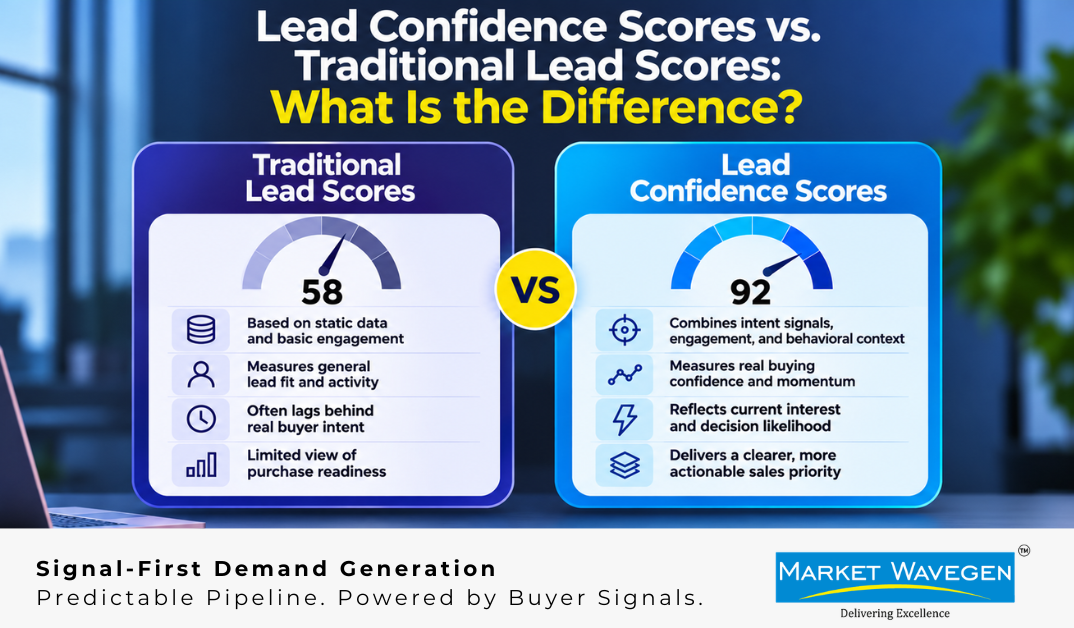
A lead score of 82 sounds reassuring. It tells you that someone has visited your pricing page three times, downloaded a whitepaper, opened four emails in a row, and registered for a webinar. The marketing team flags it as hot. It goes into the sales queue.
The rep calls. The contact is a junior analyst doing competitive research for a presentation. No budget. No authority. No active evaluation. The conversation ends in ninety seconds.
The score was accurate. The number reflected real activity. But the lead was not ready to buy and the score had no mechanism to say so.
This is the central limitation of traditional lead scoring. It measures what a prospect has done, not what they are prepared to do. It records digital behaviour without asking whether that behaviour connects to a genuine buying context. And it hands sales a number that implies readiness without validating whether readiness actually exists.
Lead confidence scoring is a fundamentally different approach. It does not replace behavioural data. It extends the assessment to include the dimensions that traditional scoring cannot see: verified identity, account fit, role authority, and confirmed buying intent. The result is a score that does not just reflect activity. It reflects whether this specific person, at this specific company, has a real and credible reason to buy right now.
What Traditional Lead Scoring Actually Measures
Traditional lead scoring was built for a simpler buying environment. When B2B marketing technology first made it possible to track digital behaviour at scale, scoring models were designed to surface engagement, the assumption being that engagement was a reliable proxy for interest, and interest a reliable proxy for buying intent.
The mechanics are straightforward. A contact accumulates points based on actions: visiting certain pages, downloading specific assets, attending events, opening emails, clicking links. Higher-value actions earn more points. A threshold score triggers a handoff to sales as a marketing qualified lead.
This model has genuine utility. It prioritises outreach toward contacts who have engaged meaningfully over those who have not. It gives sales teams a mechanism for focusing effort. And for organisations operating at high lead volume, it provides a workable filter.
But the model rests on an assumption that rarely holds under scrutiny: that the behaviour being scored is being performed by the right person, at the right company, for the right reason.
Traditional scoring has no mechanism for verifying that the person behind the activity is who the CRM record says they are. It has no way to confirm that their company still fits the ICP criteria applied when the account was first targeted. It cannot determine whether the person downloading the whitepaper holds any buying authority. And it cannot distinguish between a contact who is actively evaluating your category and one who is passively researching it out of professional curiosity.
What it produces, instead, is a number that reflects digital activity, accurate in its own terms, but silent on the questions that actually determine sales outcome.
Where Traditional Scoring Breaks Down
The limitations of traditional lead scoring become visible at specific, predictable points in the sales process.
Data decay undermines the foundation. B2B contact data degrades at a rate of 25–30% per year according to Dun & Bradstreet. People change roles, companies restructure, buying teams shift. A lead that was correctly attributed to a VP of Procurement in January may belong to someone who left the company by Q3, but their accumulated score sits in the CRM unchanged, still triggering handoffs, still generating outbound effort.
High scores do not indicate buying authority. A content manager who downloads six resources and attends two webinars will outscore a CFO who visits the pricing page once. The scoring model does not know and cannot know that one person has purchasing authority and the other does not. The result is a pipeline that surfaces engaged contacts rather than decision-ready buyers.
Behavioural signals are easily misread. Research behaviour and evaluation behaviour can look identical in a scoring model. A prospect who is three months from a purchase decision and a researcher who will never buy both generate similar digital footprints if they engage with similar content. Without a validation layer beneath the behavioural data, the score treats them the same.
Account fit is assumed, not verified. Traditional scoring operates at the contact level. It accumulates individual behaviour without asking whether the account behind the contact still matches the parameters that made it a target. A company that fitted your ICP two years ago may have grown out of your serviceable range, been acquired, changed verticals, or restructured its technology stack, but the leads associated with that account keep accumulating score, keep hitting thresholds, and keep generating wasted sales effort.
What Lead Confidence Scoring Is
Lead confidence scoring is a multi-dimensional assessment that treats behavioural engagement as one input among several, not as the primary signal on which a buying assessment rests.
The distinction matters because it shifts the question the score is answering. A traditional score answers: how much has this contact engaged with us? A confidence score answers: how much genuine, validated reason does this contact have to buy from us right now?
To answer that question, a confidence score draws on four distinct assessment layers.
The Four Dimensions of a Lead Confidence Score
Dimension 1: Verified Identity
The first dimension confirms that the contact behind the score is who the record says they are. This goes beyond email deliverability and phone validity. Deep-web research cross-references the contact against their current LinkedIn profile, company website, published content, speaker records, and regulatory filings to confirm that the person exists as described, is currently at the stated company, and holds a role consistent with what was captured.
This layer surfaces discrepancies that contact validation tools miss entirely. A name that appears valid in the CRM may belong to someone who left the company four months ago, changed roles, or moved to a competitor. An email address may still deliver while the person behind it has moved on. Identity verification at this level is not a hygiene check. It is a confirmation that the conversation you are preparing to have is with the person you think it is.
Market Wavegen’s AI-powered verification process combines deep-web research with tele-validation to confirm identity before any outreach begins. The combination of AI scale and human precision handles the edge cases that automated systems alone cannot resolve reliably.
Dimension 2: Account Fit
The second dimension confirms that the company behind the contact still matches the criteria that made it a target. Firmographic data changes continuously. A mid-market manufacturing company that fitted your ICP when it entered the database may have grown past your serviceable range, been acquired, undergone a vertical shift, or restructured in ways that affect how your solution maps to their needs.
AI systems running against live data sources, including LinkedIn company pages, Companies House filings, Crunchbase, funding announcements, and industry databases, can verify current firmographic status and flag accounts whose profile has drifted materially from the target criteria. The confidence score adjusts accordingly: a contact at a company that still strongly fits the ICP carries more weight than an identical contact at an account whose profile has moved out of range.
Intelligent Database ABM™, Market Wavegen’s firmographic matching engine, runs continuous alignment checks across 13+ markets to ensure that the accounts in the pipeline reflect current reality, not snapshot data from the day the lead was captured.
Dimension 3: Role and Authority
The third dimension addresses the question traditional scoring ignores entirely: does this person have the authority, or meaningful influence, to move a purchase decision forward?
Seniority alone is not sufficient. A VP title in a large enterprise may sit several layers above the decision-making process for a specific category of spend. A Director title in a 50-person company may carry full purchase authority. Role validation requires understanding how decisions are made in the specific account, who holds formal budget authority, who influences the evaluation, and whether the contact identified is genuinely positioned to move the process forward.
This dimension significantly adjusts the weight given to behavioural signals. A high engagement score from a contact with verified decision-making authority reads very differently from an identical score from a contact with no purchasing role. The confidence framework does not treat them equivalently.
Dimension 4: Validated Buying Intent
The fourth dimension is where confidence scoring most clearly separates from the traditional model. Rather than inferring intent from engagement behaviour, it looks for signals that indicate an active, genuine evaluation is underway.
These intent signals exist across multiple layers. Web behaviour, including specific page sequences, return visits to commercial pages, and time spent on pricing or comparison content, indicates that a contact is moving from passive interest toward active consideration. Buyer signals tracked through Mantech Mark™, Market Wavegen’s signal intelligence engine, cross-reference 32M+ daily data points across web, social, and intent platforms to identify accounts exhibiting behaviour consistent with an active evaluation cycle.
The validation layer adds the dimension that behavioural data alone cannot provide: confirmation through direct tele-qualification that the intent signals are connected to a real buying situation. Market Wavegen’s tele-qualification process uses structured conversations, in the buyer’s language and conducted by teams operating across 13+ markets, to confirm that interest is genuine, that timing is credible, and that the contact is positioned to act.
The output is not an assumed intent score. It is a confirmed interest classification: this contact, at this company, with this role, has been verified as having a genuine and active reason to evaluate your solution right now.
A Direct Comparison
The difference between the two approaches becomes clearest in a side-by-side assessment.
A traditional lead score of 78 tells you: this contact has engaged significantly with your content. They have visited key pages, downloaded assets, and responded to email sequences. They look like a buyer.
A lead confidence score of 78 tells you something more specific: this contact has been verified as currently in role at a company that fits your ICP, holds authority consistent with the buying decision you are targeting, and has demonstrated intent signals that have been confirmed through direct qualification to reflect a real evaluation in progress.
Both scores are 78. The information they carry is entirely different.
The traditional score is built on observable behaviour. The confidence score is built on verified readiness. When a rep acts on the traditional score, they are taking a calculated bet that the behaviour reflects a genuine opportunity. When a rep acts on the confidence score, they are opening a conversation that has already been confirmed as worth having.
The commercial implication is significant. Research consistently shows that sales-ready leads defined by confidence criteria, including verified identity, confirmed fit, validated authority, and confirmed intent, convert to closed business at three to four times the rate of leads defined by behavioural thresholds alone. The difference is not in the quality of the sales conversation. It is in the quality of the lead entering it.
What This Means for How You Build Pipeline
The shift from traditional scoring to confidence scoring is not primarily a technology change. It is a definitional change, a decision about what the word “qualified” actually means in your revenue process.
As long as qualification is defined by engagement thresholds, the pipeline will reflect engagement. Contacts who interact with content will accumulate score and reach sales. Some of them will be genuinely ready to buy. Many will not. And the sales team will absorb the cost of the difference through wasted discovery calls, missed quota, and eroded confidence in the leads marketing hands over.
When qualification is redefined around confidence, around the verified combination of identity, fit, authority, and intent, the pipeline becomes a different kind of asset. It is smaller. It is more expensive to build. But every conversation it generates has been confirmed as worth having before the first outreach is sent.
Market Wavegen’s full-stack qualification framework applies all four confidence dimensions before any lead is classified as sales-ready. The AI-powered verification layer, the firmographic matching engine, the tele-qualification programme operating across 13+ markets, and the intent validation provided by ConvrsAI work as an integrated system, not as separate tools applied independently, but as a continuous assessment that updates as conditions change.
The result is a pipeline that does not just look active. It is confirmed to be.
The Right Score Is the One That Tells the Truth
A lead score has one job: to tell the sales team whether a conversation is worth having. A traditional score does this imperfectly, because it is measuring the wrong thing. Engagement is a signal. It is not a confirmation.
A confidence score is built to tell the truth. It does not reward activity for its own sake. It does not inflate readiness based on content downloads and page views. It asks whether the person, the company, the role, and the timing all support a credible buying conversation, and it does not return a positive answer until that question has been genuinely answered.
The difference between a pipeline built on scores and a pipeline built on confidence is the difference between a revenue forecast that might hold and one you can stand behind.
Recommended Reads
Continue exploring our insights
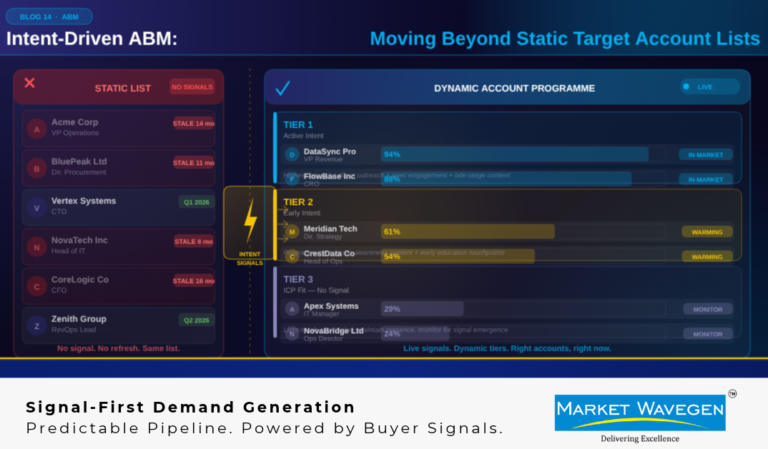
Intent-Driven ABM: Moving Beyond Static Target Account Lists
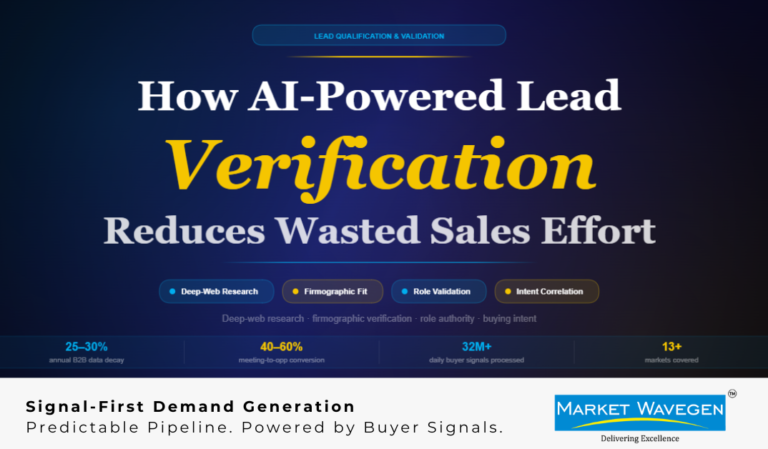
How AI-Powered Lead Verification Can Reduce Wasted Sales Effort
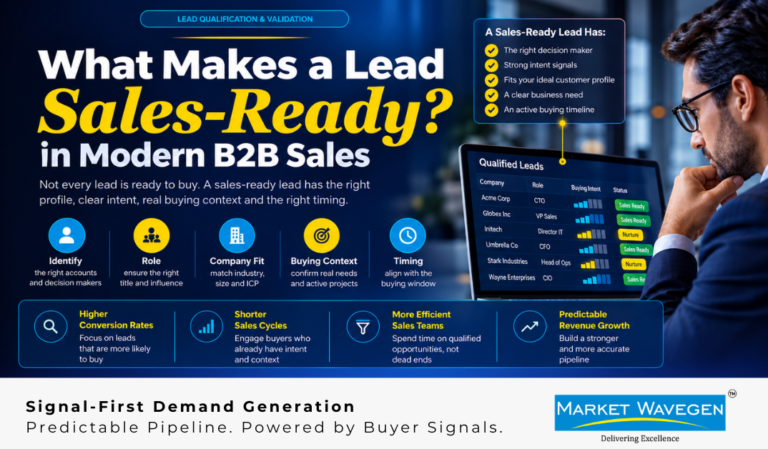
What Makes a Lead Sales-Ready in Modern B2B Sales?
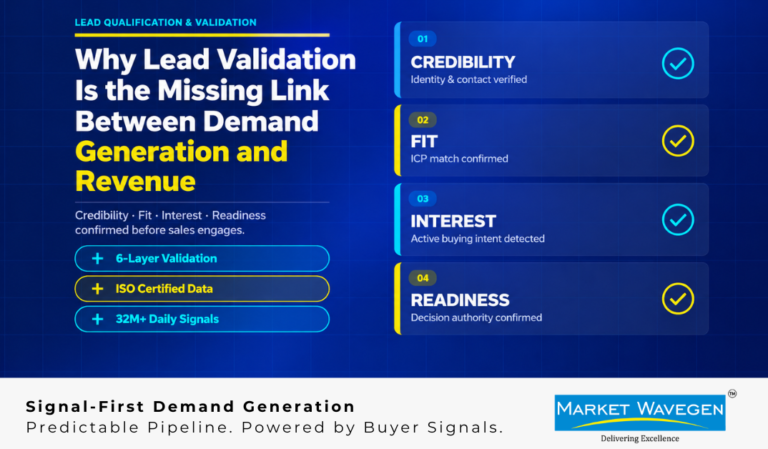
The gap that costs B2B revenue teams more than any campaign ever could.
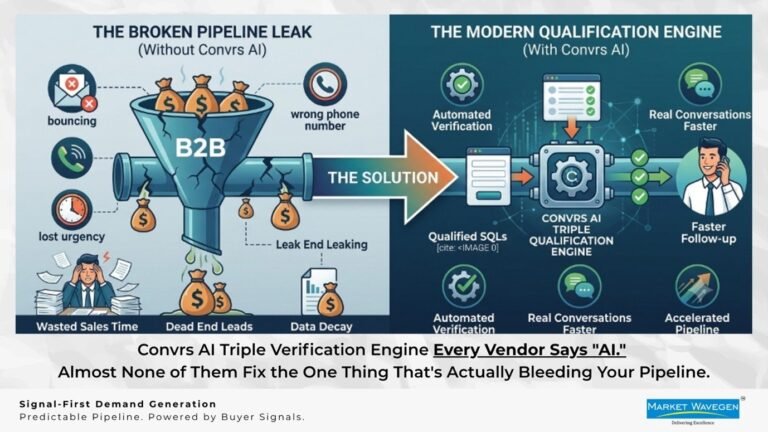
Convrs AI Triple Verification Engine: Every Vendor Says “AI.” Almost None of Them Fix the One Thing That’s Actually Bleeding Your Pipeline.
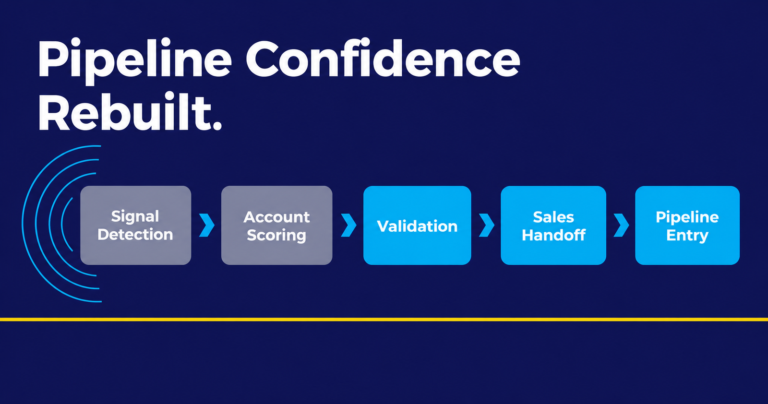
Why Your Pipeline Confidence Is Broken — and How Signal Intelligence Fixes It
← Swipe to explore more →