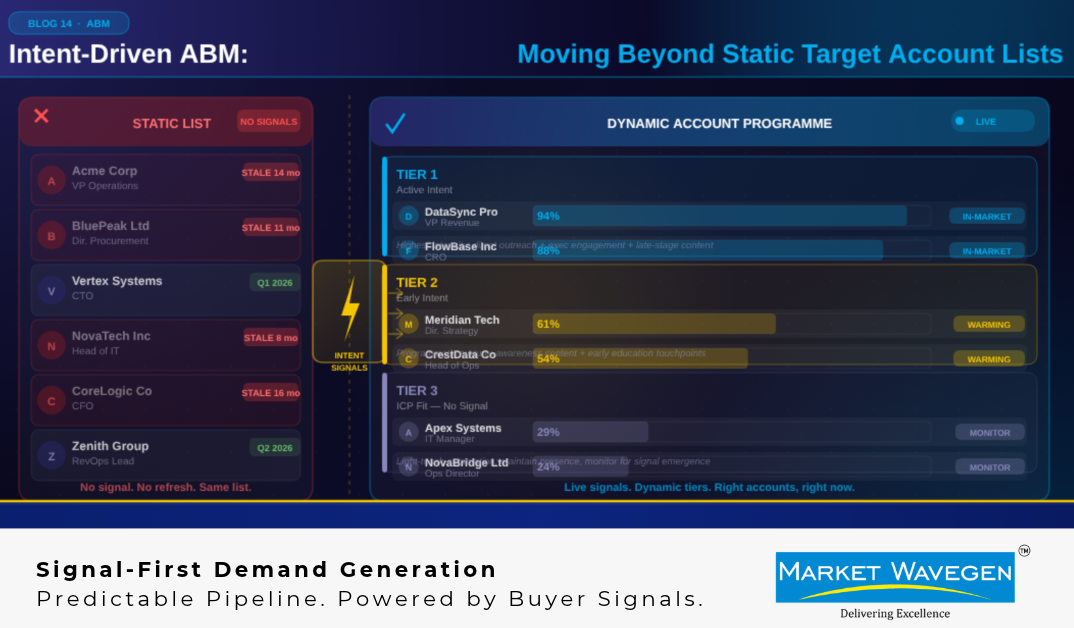
A target account list is not a strategy. It is a starting point.
The distinction matters because most ABM programmes treat the list as if it were the strategy. They identify two hundred accounts that fit the ideal customer profile, build programmes around those accounts, and then run those programmes quarter after quarter against the same two hundred names, regardless of what is actually happening inside those companies.
Some of those accounts are actively evaluating your category right now. Some of them looked like buyers eighteen months ago and have since restructured, frozen budget, or moved to a competitor. Some were always marginal fits that made the list because someone felt uncomfortable leaving them out. And some of the best accounts you could be working right now are not on the list at all because they were not in-market when the list was last reviewed.
This is the structural problem with static ABM. It is a programme built on a snapshot that is constantly becoming less accurate and it has no mechanism to correct itself.
Intent-driven ABM is what happens when you replace the snapshot with a live feed.
What Makes a Target Account List Go Stale
The appeal of a static target account list is clarity. You define the accounts. You build the programme. You execute.
The problem is that the market does not hold still while you execute.
B2B contact and company data degrades at a rate of 25–30% per year according to Dun & Bradstreet. That is not just contact churn people changing jobs, phone numbers going dead it is the underlying account reality changing. Companies get acquired. Budget authorities shift. Technology stacks change. A new CFO arrives with different vendor preferences. A round of funding accelerates a purchase decision that was eighteen months away. A hiring freeze signals that a planned technology investment has been deprioritised.
None of these changes show up in a static list. The account stays on your programme. Your team keeps engaging it. The activity generates reports that look like progress. But the underlying opportunity has either accelerated past the point where your engagement pace can catch it, or it has moved away entirely.
The other failure mode is accounts you are not working that you should be. A competitor’s customer who just posted a job listing for a role that signals dissatisfaction. A company in your ICP that just raised a Series B and is rebuilding its revenue stack. An account your team deprioritised six months ago because they went quiet and who is now actively researching your category again.
Static lists do not see any of this. They show you the accounts you decided were important at the moment you built the list. The market decides which accounts are actually important today.
What Intent Data Actually Tells You
Intent data is a signal that an account is exhibiting behaviour consistent with active research or evaluation in a specific category.
That definition is worth unpacking carefully, because intent data is frequently overstated and sometimes misapplied.
What intent signals can tell you: an account is consuming content related to your category at higher-than-baseline frequency; multiple people at the account are researching your category concurrently; the account is visiting review sites, reading comparison content, or engaging with competitor material in ways that suggest active evaluation.
What intent signals cannot tell you on their own: who specifically at the account is driving the research; whether the company has the budget and authority to act; whether the signals represent a genuine purchase decision or exploratory research by a junior analyst; how far along the evaluation is; and whether your solution is being considered or only a category competitor.
This is why intent data functions as a prioritisation input, not a qualification conclusion. An account with elevated intent signals deserves attention. It does not automatically deserve a sales call.
The value of intent data in an ABM context is that it gives you a dynamic ranking of your target universe a continuously updated view of which accounts are exhibiting behaviour that suggests readiness, so your programme can concentrate resources on those accounts while they are in-market, rather than spreading effort evenly across a list built months ago.
Mantech Mark™, Market Wavegen’s signal intelligence engine, processes over 32 million buyer signals daily across web, social, and intent data platforms. The output is not a list of interested companies it is a continuously updated prioritisation signal that shows which accounts in your universe are moving, in which direction, and at what velocity.
The Architecture of a Dynamic Account Programme
Replacing a static list with a dynamic programme requires a different way of thinking about how ABM works.
A static programme starts with accounts and builds engagement around them. A dynamic programme starts with signals and uses those signals to route resources deciding not just which accounts to engage, but how intensively, through which channels, and at what point in the buying cycle.
Tier 1 Active Intent Accounts
These are accounts showing elevated, multi-threaded intent signals: multiple stakeholders researching the category, active engagement with comparison or evaluation content, trigger events at the account level that suggest a purchase decision is imminent or in progress.
These accounts receive your highest-intensity engagement. Sales outreach is prioritised. Executive involvement is activated. Content is calibrated for late-stage buying context specific ROI evidence, competitive differentiation, case studies from comparable accounts. The goal is to be present and credible at the moment of decision.
Tier 2 Early Intent Accounts
These accounts are showing intent signals, but at lower intensity or early-stage patterns a single stakeholder beginning to research, trigger events that suggest future intent (a funding announcement, a new executive hire in the relevant function), or renewed engagement from an account that had previously gone quiet.
These accounts receive programmatic nurture calibrated for awareness and education. The goal is to establish presence before the evaluation begins in earnest, so that when the account moves into active research, your position is already established.
Tier 3 ICP-Fit, No Current Intent
These are accounts that fit your ideal customer profile but are showing no current intent signals. They belong in the programme, but they should not receive the same resource intensity as accounts actively in-market.
Automated content programmes, light-touch engagement, and ongoing monitoring are appropriate here. The goal is to maintain presence so that when intent emerges, the account already has familiarity with your brand and your positioning.
Accounts Exiting the Programme
Equally important: accounts that fall below your ICP threshold because of firmographic drift an acquisition, a headcount reduction that moves the company outside your serviceable range, a vertical shift should be removed from active investment. A static programme keeps these accounts in perpetuity. A dynamic programme deprioritises them automatically as signals indicate the fit has changed.
Aligning Marketing Activity to Buying Stage
The most significant operational shift in intent-driven ABM is that the buying stage of an account not its position on a predetermined list drives the content and channel decisions for that account.
This sounds obvious. In practice, most ABM programmes do not work this way. They run campaigns at a list, with messaging calibrated for a hypothetical buyer who is assumed to be somewhere in the mid-funnel. The same webinar invitation goes to accounts in early research and accounts in final evaluation. The same thought leadership content goes to accounts with active intent and accounts with no current signals at all.
Intent-driven ABM disaggregates this. Early-intent accounts receive content designed to frame the problem and establish category credibility. Mid-intent accounts receive comparison content, evidence of outcomes, and analyst perspectives that support the evaluation they are actively conducting. High-intent accounts receive sales-qualifying content and direct outreach calibrated for a buyer who is already close to a decision.
The channel mix follows the same logic. Early-intent accounts may be best reached through content syndication and display broad, low-commitment formats that build familiarity. Mid-intent accounts warrant direct email sequences and social personalisation. High-intent accounts justify phone-based outreach and executive engagement.
Intelligent Database ABM™, Market Wavegen’s firmographic matching engine, runs continuous ICP alignment checks across 13+ markets to ensure that the accounts receiving the highest-intensity engagement are genuinely the accounts most likely to convert based on current fit and current intent, not historical assumptions.
The Multi-Stakeholder Dimension
One of the persistent failures of account-based marketing is that it identifies accounts without understanding the buying committee inside them.
A B2B purchase decision in the segments that most ABM programmes target involves an average of six to ten stakeholders. Each stakeholder brings different priorities, different information needs, and different influence on the outcome. Marketing to the account without understanding the committee is like preparing for a negotiation without knowing who will be in the room.
Intent data helps here not just at the account level, but at the contact level. When multiple individuals at an account are showing concurrent research behaviour, that is a stronger signal than a single contact. When the research is coming from both a technical evaluator and a commercial decision-maker, that is a stronger signal than when it is coming from a single function.
Mapping the buying committee inside high-intent accounts identifying who is researching, what they are researching, and what their role in the decision is likely to be allows ABM programmes to personalise not just at the account level but at the stakeholder level. The technical evaluator receives content that addresses their integration and security concerns. The commercial decision-maker receives ROI evidence. The end user receives workflow and productivity content.
This level of stakeholder mapping requires a combination of intent signal analysis, firmographic data, and direct validation which is why the tele-qualification layer remains essential even in a highly automated ABM architecture. AI systems can identify that multiple stakeholders at an account are researching your category. A human qualification conversation is what confirms who those stakeholders are, what their role in the decision is, and whether the opportunity is real.
Measuring What Actually Matters
The metrics that make sense for intent-driven ABM are different from those that make sense for static list programmes.
A static programme measures engagement: open rates, click rates, ad impressions, content downloads. These metrics tell you that activity happened. They do not tell you whether that activity reached the right accounts at the right time.
Intent-driven ABM measures account progression: how many accounts moved from Tier 3 to Tier 2 this month; how many Tier 2 accounts moved to Tier 1; how many Tier 1 accounts entered a qualified sales opportunity; how many opportunities were sourced from accounts that were not on the original list.
These metrics are harder to report because they require a view of the entire account universe, not just the accounts you are actively running programmes against. But they are the metrics that reflect whether your ABM programme is actually aligned to buying reality or whether it is just generating activity against a list.
Pipeline-to-ICP-fit ratio, intent-to-opportunity conversion rate, and average days from first intent signal to qualified opportunity are the leading indicators of a dynamic programme that is working. If those numbers are improving, your programme is correctly calibrating resource to opportunity. If they are not, the most likely cause is that your prioritisation is still lagging behind the market.
The Transition From Static to Dynamic
Organisations that have run static ABM programmes for several years often face a specific transition challenge: the existing list represents significant investment, and there is institutional resistance to deprioritising accounts that have been targets for a long time.
The practical starting point is not to replace the existing list but to overlay it with intent signals. Run the intent analysis against your current account universe. Identify which accounts are showing active signals, which are dormant, and which have drifted below ICP fit. Use that analysis to redistribute resource intensity increasing investment in active accounts, reducing it in dormant ones without immediately removing any account from the programme.
Over time, as the intent-driven approach demonstrates that high-intensity engagement of active accounts converts at a materially higher rate than maintenance engagement of dormant ones, the case for a fully dynamic programme becomes self-evident from the pipeline data.
The eventual state is a programme without a fixed list at all only a continuously updated prioritisation tier, fed by live signals, firmographic validation, and direct qualification, that routes marketing and sales resource to the accounts where the probability of conversion is highest right now, not the accounts that looked promising when someone last reviewed a spreadsheet.
From Account List to Account Intelligence
ABM was always meant to be a precision strategy the antithesis of spray-and-pray demand generation. But a static list executed with automation is not precision. It is just spray-and-pray with a smaller target.
Genuine precision in account-based marketing means knowing which accounts are in-market today, what stage of evaluation they are at, who inside those accounts is driving the research, and what content and engagement will move them forward. That knowledge cannot come from a list built last quarter. It comes from live signals, validated in real time, against an account universe that is constantly being updated to reflect the market as it actually exists.
Intent-driven ABM does not make the work harder. It makes the work better directed so that when a sales rep makes a call, they are calling an account that is already in motion, not an account that someone decided eighteen months ago might eventually need what you sell.
The pipeline that results is not necessarily larger. But it is built on intelligence, not assumption. And the difference in conversion rate between the two makes the distinction worth every structural change it requires.
Recommended Reads
Continue exploring our insights
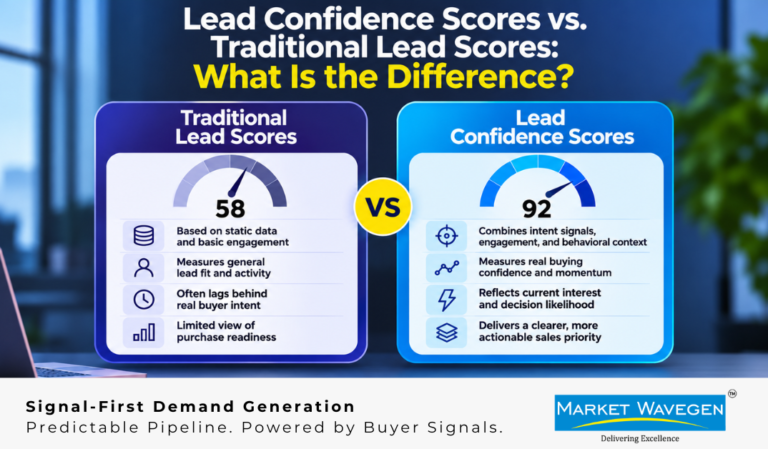
Lead Confidence Scores vs. Traditional Lead Scores: What Is the Difference?
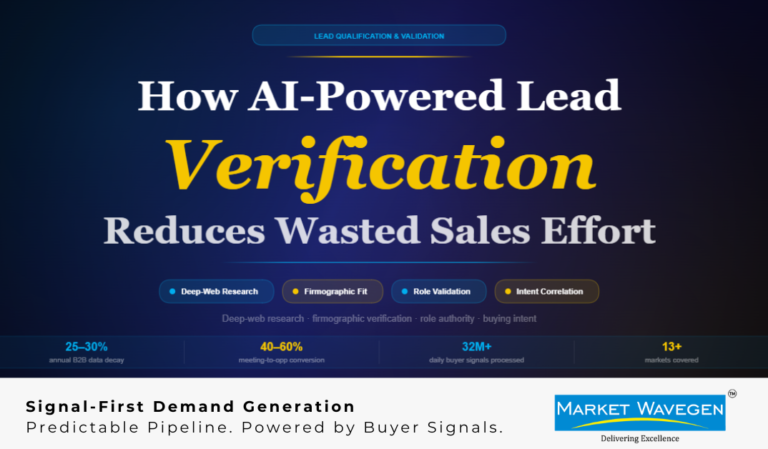
How AI-Powered Lead Verification Can Reduce Wasted Sales Effort

What Makes a Lead Sales-Ready in Modern B2B Sales?
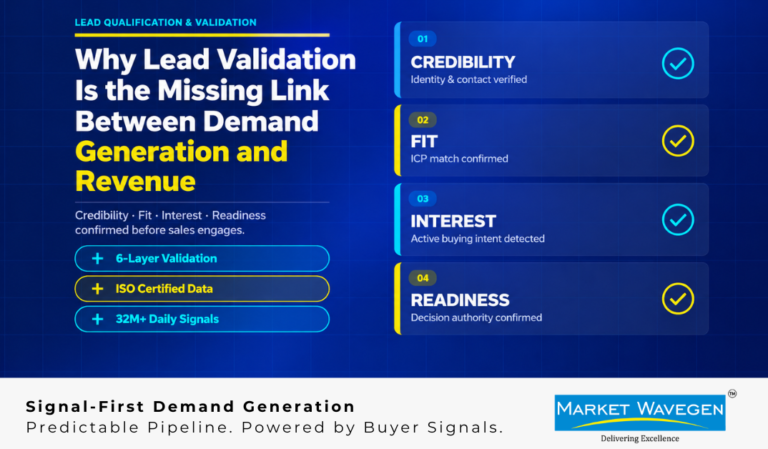
The gap that costs B2B revenue teams more than any campaign ever could.
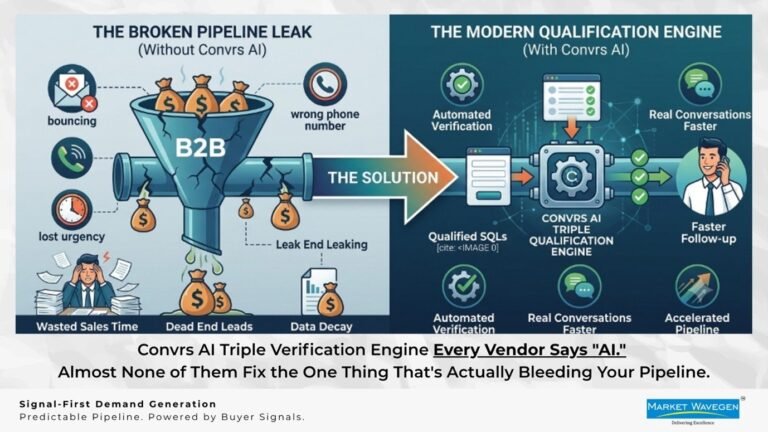
Convrs AI Triple Verification Engine: Every Vendor Says “AI.” Almost None of Them Fix the One Thing That’s Actually Bleeding Your Pipeline.
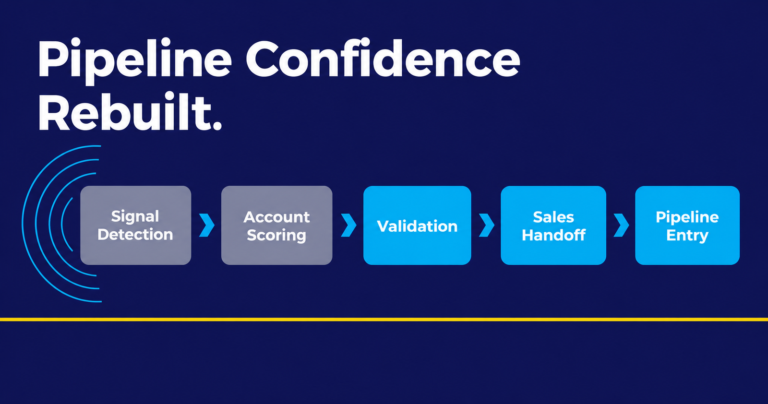
Why Your Pipeline Confidence Is Broken — and How Signal Intelligence Fixes It
← Swipe to explore more →